
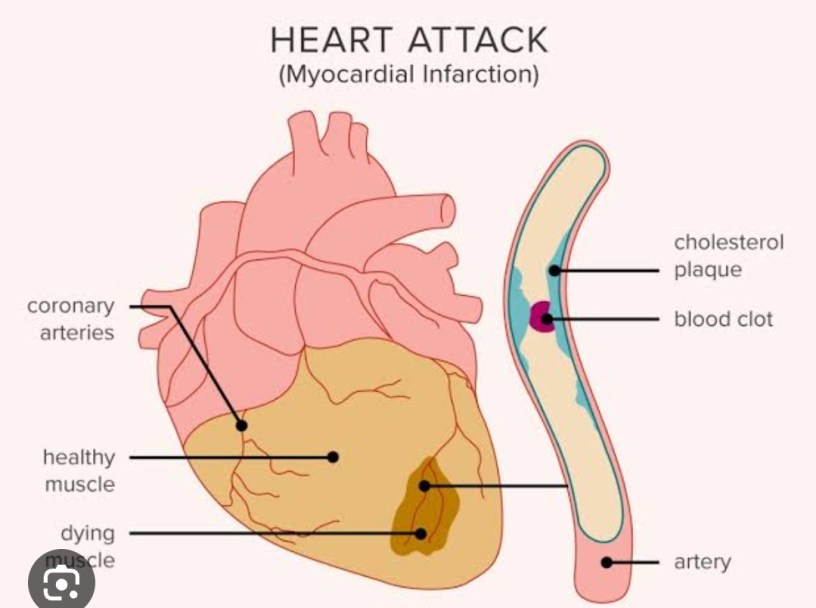
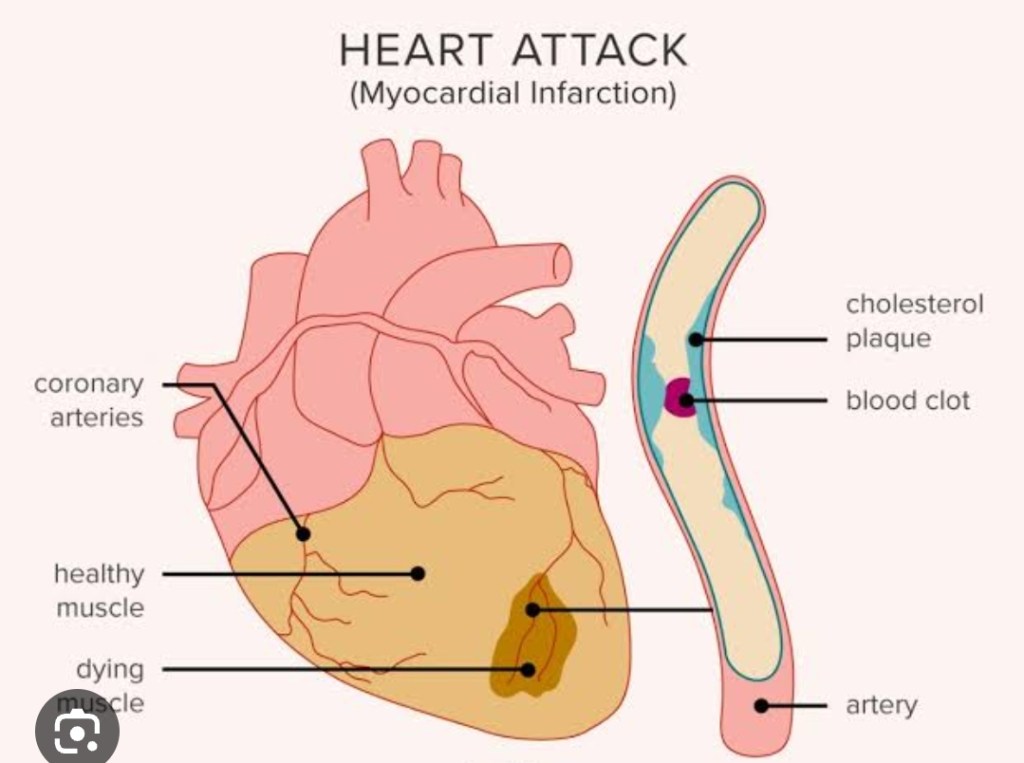
Agra Heart Center aims for patient education along with successful treatment, we believe that “beads” (basic education of disease process – a term coined by Dr. C. R. Rawat Sir, Senior Consultant Cardiologist) is foremost important for good patient compliance of medications and lifestyle.
Heart attack can happen in apparently healthy individuals. Kindly note that Heart attack and cardiac arrest are two different things, we shall be discussing about Heart attack in this post.
First and foremost important, is never to ignore your warning signs of an underlying coronary disease. Life is once and precious.
Warning signs of coronary disease (which lead to heart attack include)-
* chest pain or chest heaviness – whether on the left side or the right side lasting for more than 10 minutes, especially if it occurs at rest or increases on stress – like physical movement.
Pain or heaviness can also be upto the jaw, or radiating to one or both arms (whether right or left arm)
Pain can even go upto the upper abdominal region, but never below the umbilicus.P
Pain can even upto the upper or lower back.
Some patients present with all these characteristics of pain, while some present with only one or two types of pain characteristics.
* It is important to note that chest pain/ heaviness may not be present at all in some individuals- shortness of breath or breathlessness on walking or breathlessness that suddenly appears ar rest or on walking stairs may also be signs / symptoms of an underlying coronary artery disease.
*Sweating is an important sign and symptom that occurs- either standalone or with chest pain or heaviness. If sweating occurs with chest pain or heaviness – the probability of a coronary disease is very highly likely.
* old age patients may not exhibit any classical signs at all, but rather may present with sudden onset of fatigue.
*palpitations/ ghabrahat is a major symptom – where patient either experiences rapid increase in heart rate or slowing of the heart rate or the heart beating asynchronously or with increased force such that the patient is aware of their own heart beat.
*you will be surprised to know that more than 25% of the patients attribute their symptoms to “gas” or “acidity” because they might present with symptoms like heartburn, or nausea or vomiting.
The important thing is never to ignore your symptoms. The statistics show that half the patients with heart problems ignore their initial symptoms are not even able to reach the hospital in time, and die on the way. Hence, we request to never ignore your symptoms. It is always better to be safe than sorry.
What to do in case you or your near/dear ones have these symptoms?
1. Ask the patient to lie down. Do not let them walk or scream. The goal is to reduce physical stress which will only aggravate the problem and lead to rapid deterioration.
2. Call an ambulance/ if you have your own vehicle, move them in a chair to the car and take them to your nearest hospital/Cardiologist.
3. If the patient has never had any bleeding – or any history of gastric ulcer or blood in vomiting or blood in sputum previously- they can be given aspirin 325 mg to chew.
Kindly note, that if the patient is unconscious or can’t take the medications bg themselves or has severe headache along with other symptoms, kindly do not attempt to give aspirin by yourself without letting a doctor see themselves at first – many of times, patient may have developed cerebral hemorrhage in such cases where aspirin may prove problematic.
There is a misconception circulating in social media that putting a sorbitrate under the tongue may alleviate the heart attack.
In most cases this may lead to symptom alleviation however, all heart attacks are not similar. Sorbitrate under the tongue without an ecg to determine the type of heart attack (should not be given in RV type of MI) may lead to rapid deterioration.
Also, it should only be taken in lying down position and especially not to be given if patient has borderline blood pressure.
Basically, we would request the attendants to get the patient to lie down, and arrange a car or ambulance, then put the patient in a chair and move the patient in the chair in the car and let him lie down in the car and go to your nearest hospital.
Please be aware that most often heart attacks may appear without warning signs and lead to rapid deterioration. Such is the nature of the disease process. However, the best thing one can do in such cases is not to ignore your symptoms and go to the hospital and get sure and seek timely treatment.
What tests should be done in case of coronary disease – the must have tests are :
ECG, serial troponins, 2D echo, Coronary Angiography.
Agra Heart Center and multispecialty hospital is ranked 15th in National rankings for single speciality (cardiology) by the Times Group.
The highest rank in agra amongst all hospitals.
AGRA Heart Center has some of the best cardiologists that work as a team to attain best patient outcomes, genuine advice and trust of the family.
AHC has a state of the art cath lab equipped for all kinds of cardiac procedures, along with 2d echo, dobutamine Stress Echo, ECG.
Dr. Rajat Rawat and Dr. C. R. Rawat aim to promote awareness of the symptoms and signs of heart disease so that patients seek early treatment so as to avoid complications.
For appointment call on 7830000618
Agra Heart Center, 5, Church Road, Civil Lines, Ram Nagar Colony Agra.
The oldest and highest ranked dedicated cardiac hospital in Agra.

