
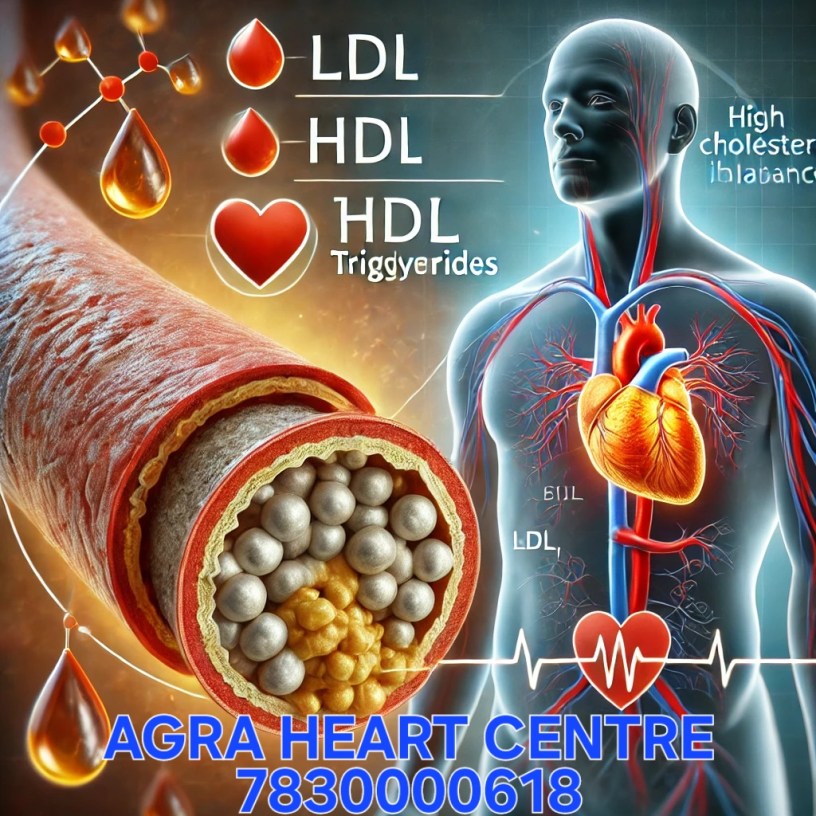
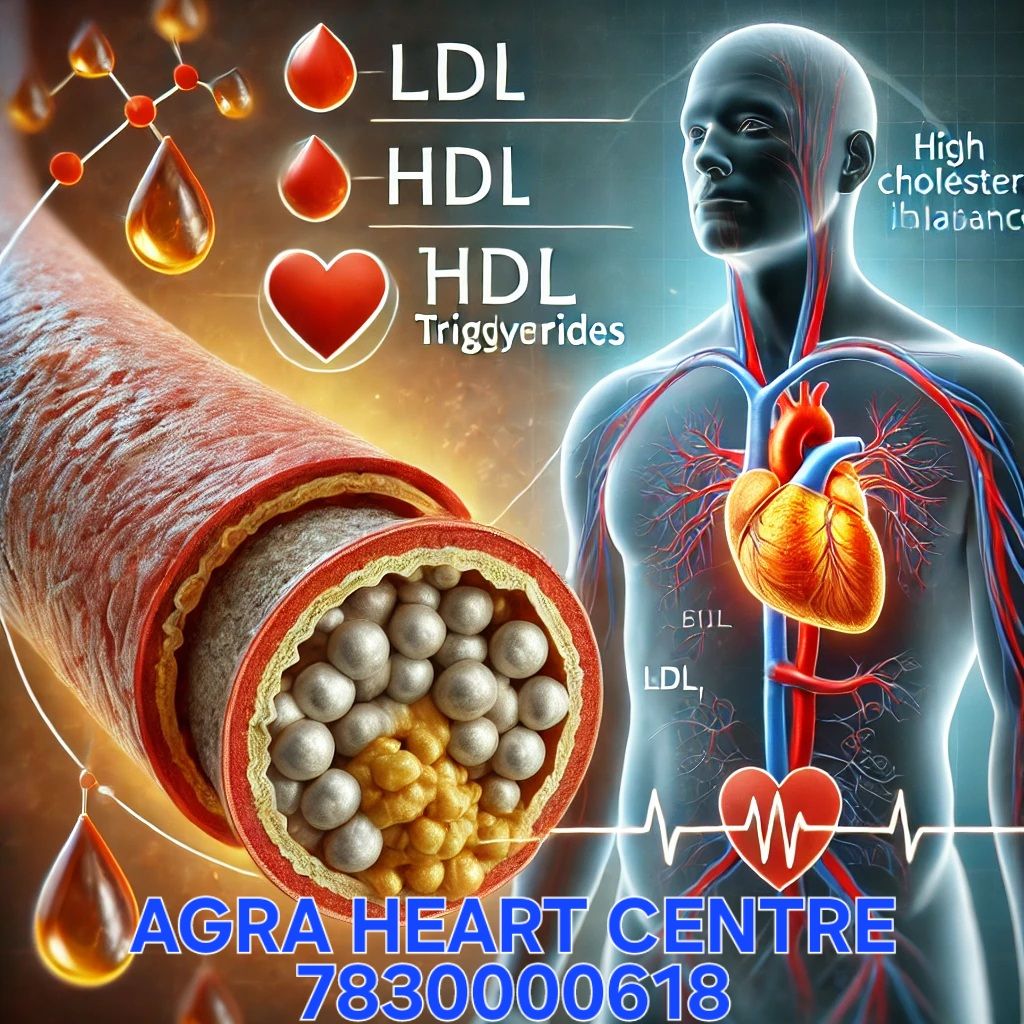
High cholesterol is a significant health concern that can lead to severe cardiovascular and metabolic complications. While cholesterol is essential for various bodily functions, excessive levels—especially of LDL (low-density lipoprotein) and triglycerides—can lead to heart disease, stroke, and other health issues.
At Agra Heart Centre and Multispecialty Hospital, Dr. CR Rawat and Dr. Rajat Rawat are the leading heart specialists in Agra, Etah, Mainpuri, Hathras, Kasganj, Soro, Fatehabad, Sadabad, and Dholpur for managing deranged lipid profiles and preventing heart attacks.
Causes of High Cholesterol
Several factors contribute to elevated cholesterol levels, including:
1. Unhealthy Diet
- High intake of saturated fats and trans fats from processed and fried foods.
- Excessive consumption of red meat, full-fat dairy products, and refined carbohydrates.
2. Sedentary Lifestyle
- Lack of physical activity can reduce HDL (good cholesterol) and increase LDL levels.
- Weight gain and obesity worsen lipid profile abnormalities.
3. Genetics (Familial Hypercholesterolemia)
- A hereditary condition where the body struggles to remove LDL from the bloodstream.
4. Chronic Conditions
- Diabetes, hypothyroidism, and chronic kidney disease contribute to high cholesterol.
5. Smoking and Alcohol Consumption
- Smoking lowers HDL and damages blood vessels, increasing the risk of plaque formation.
- Excessive alcohol intake raises triglycerides and increases the risk of fatty liver disease.
6. Stress and Lack of Sleep
- Chronic stress leads to hormonal imbalances that elevate cholesterol levels.
- Poor sleep patterns are linked to metabolic disorders, including high triglycerides.
Complications of High Cholesterol and Lipid Abnormalities
When cholesterol levels remain unchecked, severe complications can arise.
1. Cardiac Complications
- Atherosclerosis – Cholesterol deposits form plaques in arteries, leading to blockages.
- Heart Attack (Myocardial Infarction) – Due to complete blockage of a coronary artery.
- Angina (Chest Pain) – Reduced blood supply to the heart causing discomfort.
- Stroke – Blockages in arteries supplying the brain can lead to ischemic strokes.
- Peripheral Arterial Disease (PAD) – Reduced blood supply to limbs, increasing risk of amputation.
2. Liver and Kidney Complications
- Fatty Liver Disease – High triglycerides contribute to fat buildup in the liver, leading to non-alcoholic fatty liver disease (NAFLD).
- Chronic Kidney Disease (CKD) – Increased LDL and triglycerides damage kidney function, worsening hypertension and fluid retention.
3. Impact of Specific Lipid Abnormalities
- High LDL (“Bad” Cholesterol): Major contributor to heart disease, stroke, and arterial plaque buildup.
- High Triglycerides: Increases risk of pancreatitis, fatty liver, and metabolic syndrome.
- Low HDL (“Good” Cholesterol): Reduces the body’s ability to clear excess cholesterol, increasing cardiovascular risks.
- High Lp(a) (Lipoprotein A): A genetic factor significantly increasing the risk of heart attack and stroke.
How to Naturally Reduce Cholesterol Levels
Managing cholesterol levels through lifestyle modifications is key to preventing cardiovascular disease.
✔ Eat a Heart-Healthy Diet
- Increase fiber intake (oats, beans, fruits, and vegetables).
- Include healthy fats (olive oil, nuts, and seeds).
- Avoid processed and fried foods rich in trans fats.
✔ Exercise Regularly
- Engage in at least 30 minutes of brisk walking, jogging, or cycling daily.
- Strength training improves metabolism and helps with weight loss.
✔ Maintain a Healthy Weight
- Weight loss reduces LDL and triglycerides while boosting HDL.
✔ Quit Smoking and Reduce Alcohol Consumption
- Improves heart health and prevents plaque buildup in arteries.
✔ Manage Stress and Sleep Well
- Practice meditation, yoga, and deep breathing exercises.
- Get 7-9 hours of restful sleep each night.
✔ Increase Omega-3 Fatty Acids
- Found in fatty fish like salmon, flaxseeds, and walnuts, these lower triglycerides.
LDL Cholesterol Guidelines by AHA (American Heart Association)
Ideal LDL Levels Based on Risk Categories
- Low Risk Individuals: LDL should be < 100 mg/dL
- Moderate Risk Individuals: LDL should be < 70 mg/dL
- High-Risk Patients (Diabetics, Hypertension, Smoker, Family History): LDL should be < 55 mg/dL
Ideal LDL Levels for Post-Stent & Post-Bypass Patients
- Patients who have undergone angioplasty, stenting, or bypass surgery should maintain LDL below 50 mg/dL to prevent future blockages.
Best Hospital for Lipid Management & Heart Care in Agra
If you have high cholesterol, chest pain, or a history of heart problems, Agra Heart Centre and Multispecialty Hospital is the best hospital in Agra for expert cardiac care.
Meet the Best Cardiologists in Agra & Nearby Cities
✅ Dr. CR Rawat – The most experienced heart doctor in Agra, specializing in deranged lipid profile correction and long-term heart health management.
✅ Dr. Rajat Rawat – The perfect cardiologist for young heart attack prevention, treatment of acute heart attacks, angiography, angioplasty, and stenting. His expertise helps avoid bypass surgery in critical cases.
Patients from Agra, Etah, Mainpuri, Hathras, Kasganj, Soro, Fatehabad, Sadabad, and Dholpur trust Agra Heart Centre for the best heart care and cholesterol management.
If you are experiencing high cholesterol, chest pain, heart disease symptoms, or need expert guidance on lipid management, book a consultation today at Agra Heart Centre – the best cardiology hospital in Agra!
Address :
Agra Heart Centre and Multispecialty Hospital : 5, Church Road, Civil Lines, Ram Nagar Colony, Agra.
Phone : 7830000618, 0562-2850356
Dr. CR Rawat/ Dr. Rajat Rawat

